
PestInsect
Rhinoceros Beetle
Oryctes rhinoceros
High
Active window
June – September
India's first in global coconut production. Grown across 2.08 million hectares, yielding 23,954 billion nuts annually — with a productivity of 11,505 nuts per hectare.
The crop is grown across 2.08 million hectares, producing 23,954 million nuts annually with a productivity of 11,505 nuts per hectare. Four Southern States - Kerala, Karnataka, Tamil Nadu and Andhra Pradesh - together account for 90% of India's coconut output.
90% of India's coconut output comes from four Southern states.
Coconut tolerates a wide pH range of 5.0-8.0, including salinity. Good drainage, water-holding capacity, and the absence of hard substratum within 2 m are essential.
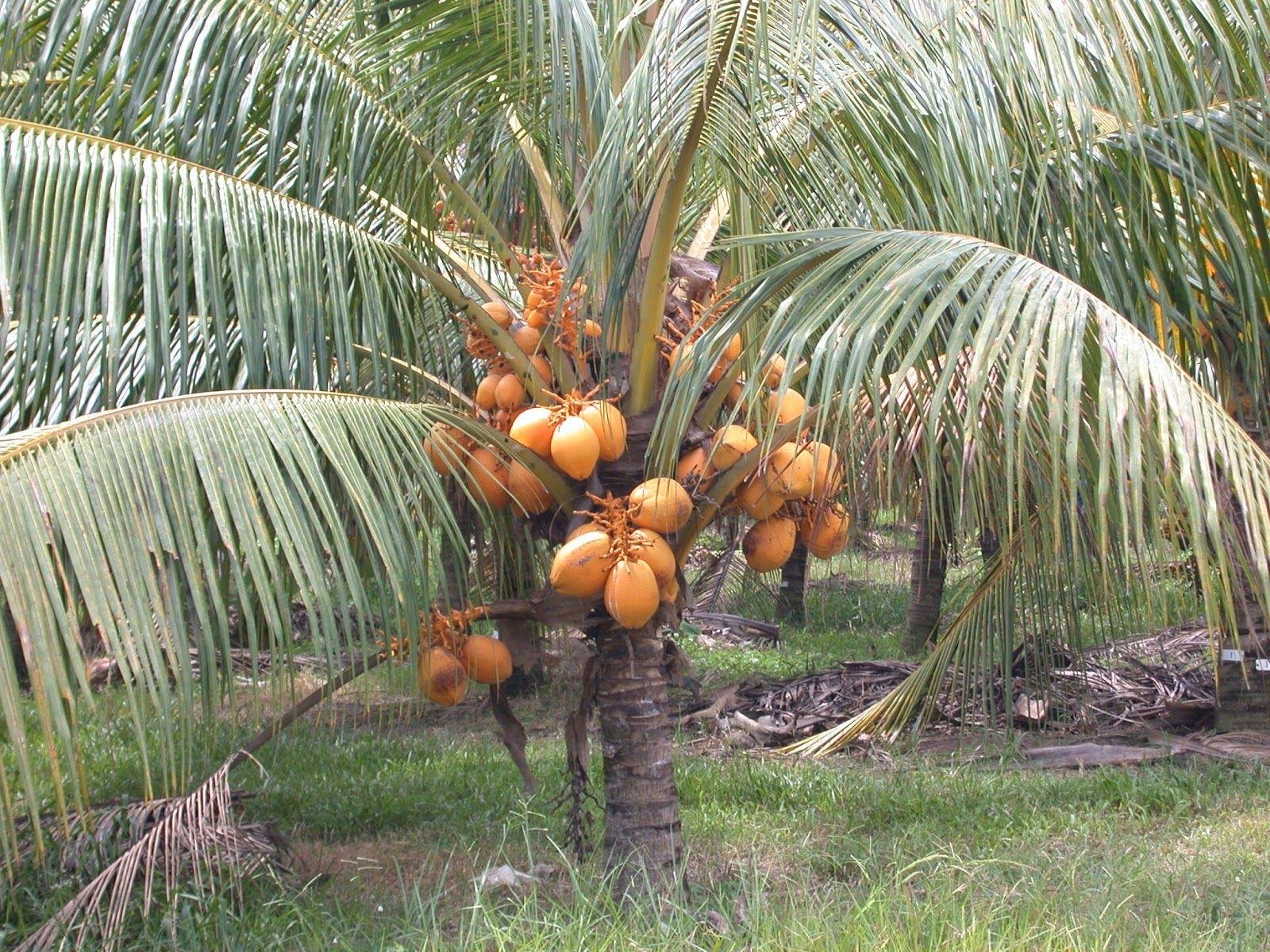
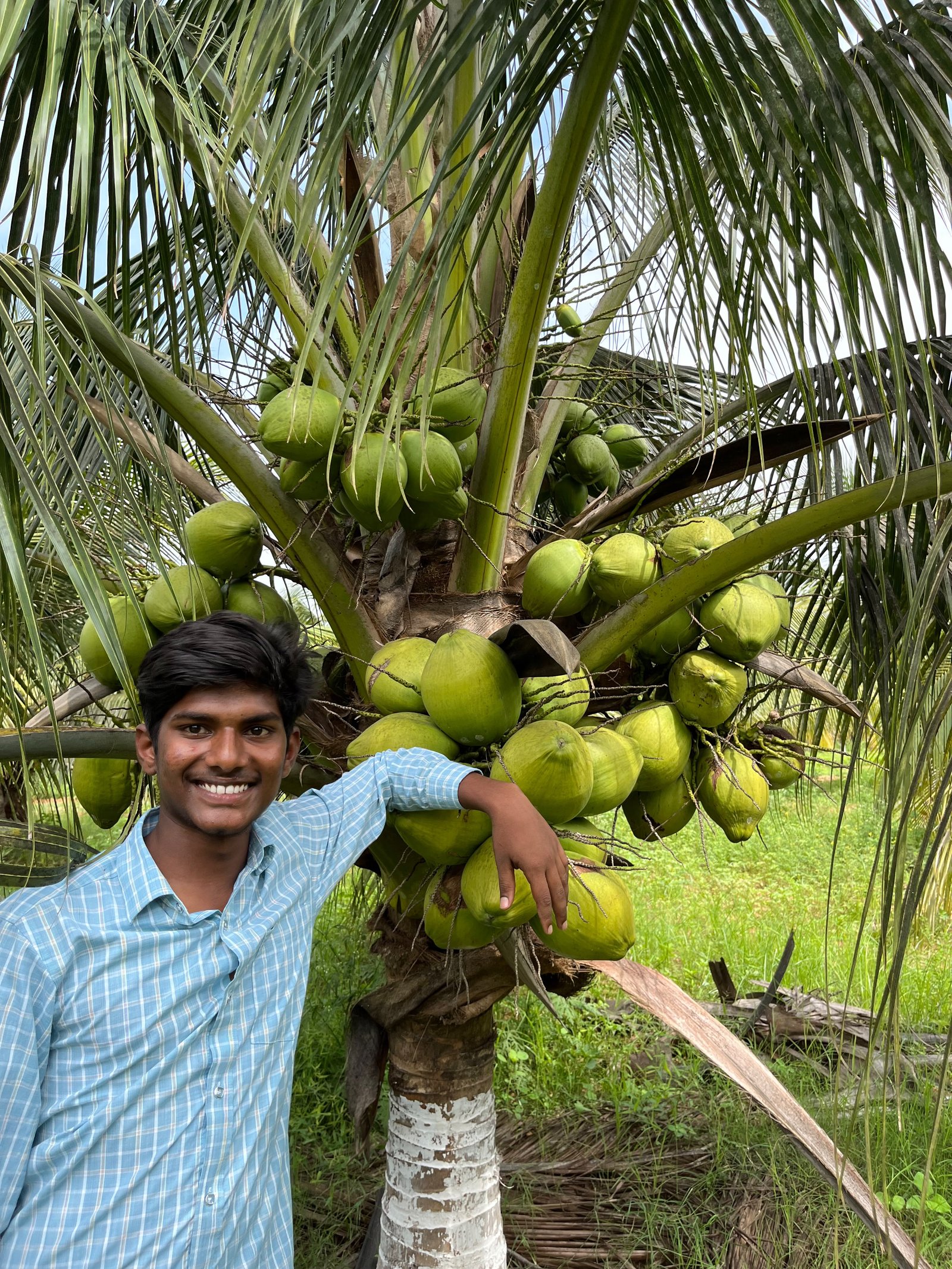
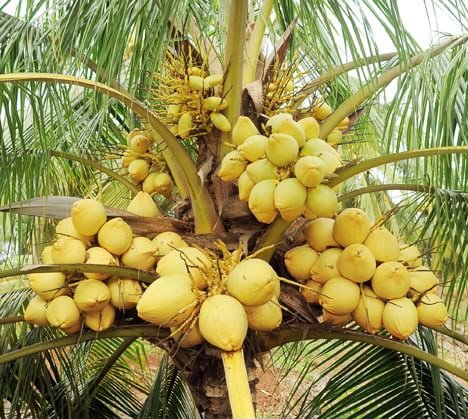
Shorter stature. Grown mainly for tender coconuts and establishing parent material in hybrid seed production. Nuts are smaller with soft, leathery copra and low oil content.

Adjust the inputs below — results update instantly based on CDB productivity norms.
Note — Prices are indicative. Actual revenue varies with market rates, soil, irrigation, and farm management practices.
A refined guide for growers to identify threats quickly, understand the symptoms clearly, and apply the right interventions with confidence.
Oryctes rhinoceros
June – September
Rhynchophorus ferrugineus
Year round
Aceria guerreronis
Dry season
Phytophthora palmivora
Monsoon season
Thielaviopsis paradoxa
July – November
Phytoplasma sp.
Year round
Month-by-month operations, pest watches, and seasonal milestones for a productive coconut farm.
Eight carefully structured steps take a coconut palm from nursery selection to field planting, as prescribed by India's Coconut Development Board.
Select well-drained, light-textured, irrigated soil for the nursery. The site should have access to water for regular watering during dry months and be free from shading.
Choose a 40–80 year old mother palm bearing at least 80 nuts per annum, carrying 30 or more green leaves, and yielding a minimum of 12 bunches per year with good-quality nuts.
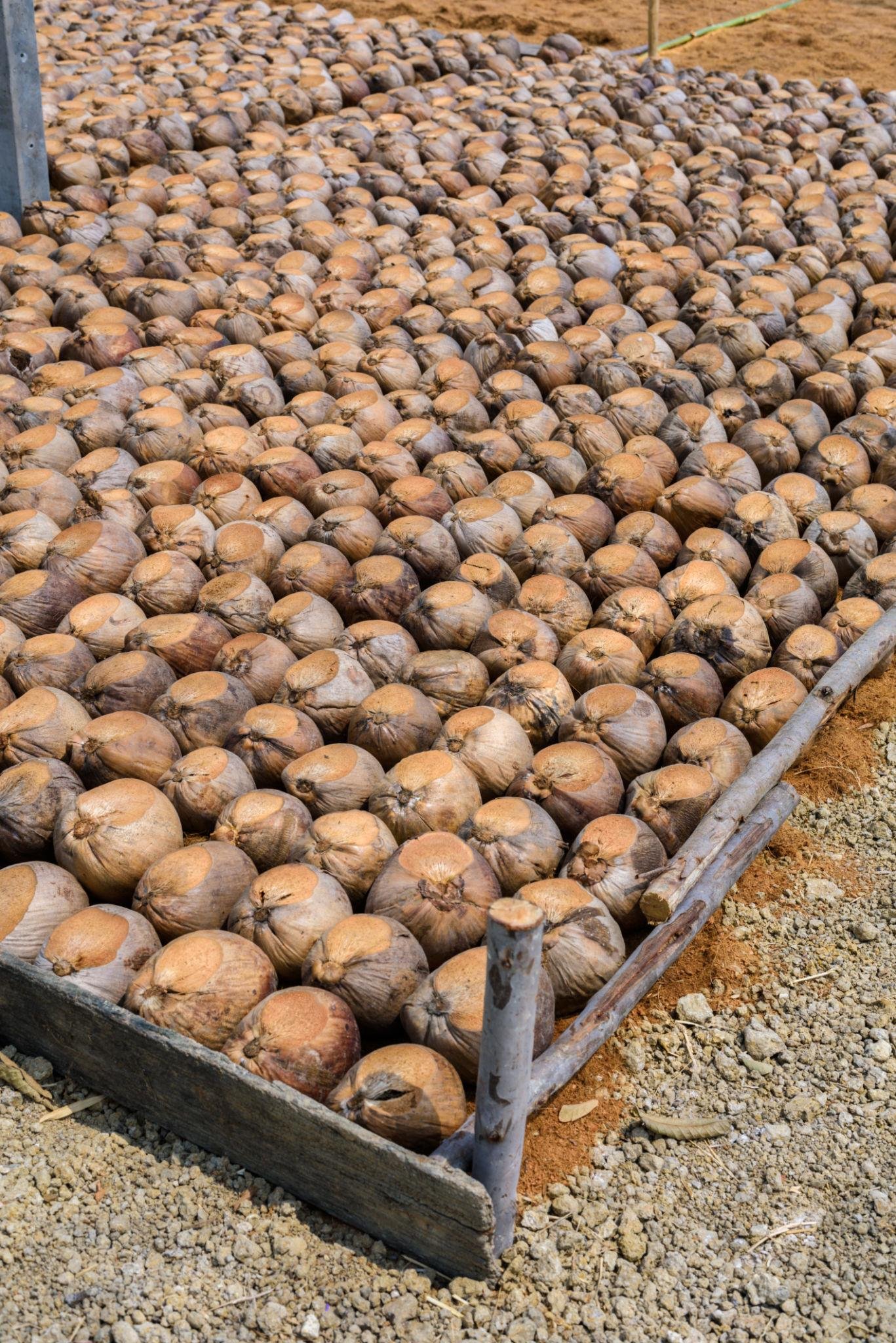
Collect fully mature seednuts 11 or more months after pollination. Seednuts should weigh 600 g or more in the husked condition and yield a minimum of 150 g of dry copra per nut.
Collect seednuts between December and May for sowing in May–June coinciding with the onset of the South-West Monsoon, so seedlings benefit from natural rainfall.
Prepare beds 1.5 m wide at a raised level. Plant seednuts 30 cm apart within rows and 60 cm between rows. Cover with soil up to the shoulder and mulch with coconut fronds.
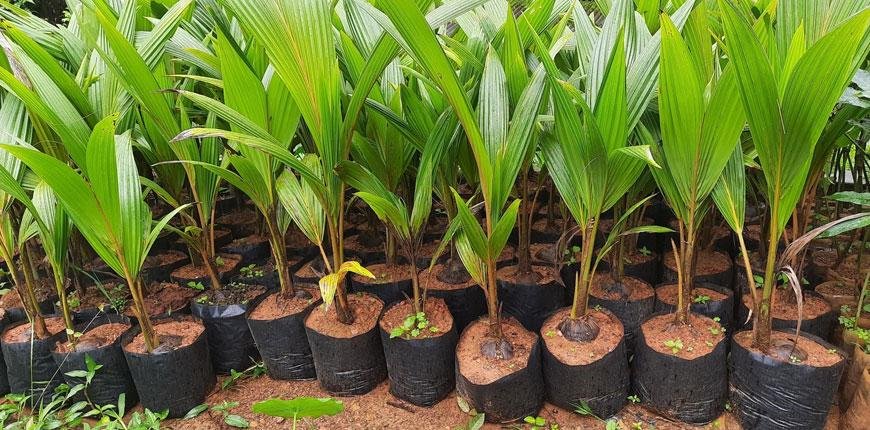
At 9–12 months, select seedlings with a collar girth of 10–12 cm, 6 or more leaves, and short, stout stems. Expected recovery is 60–65 % of sown seednuts.
Dig pits of 1 × 1 × 1 m in loamy soil, 1.2 × 1.2 × 1.2 m in laterite soil, and 0.75 × 0.75 × 0.75 m in sandy soil. Expose to sun for 2–3 weeks before filling.
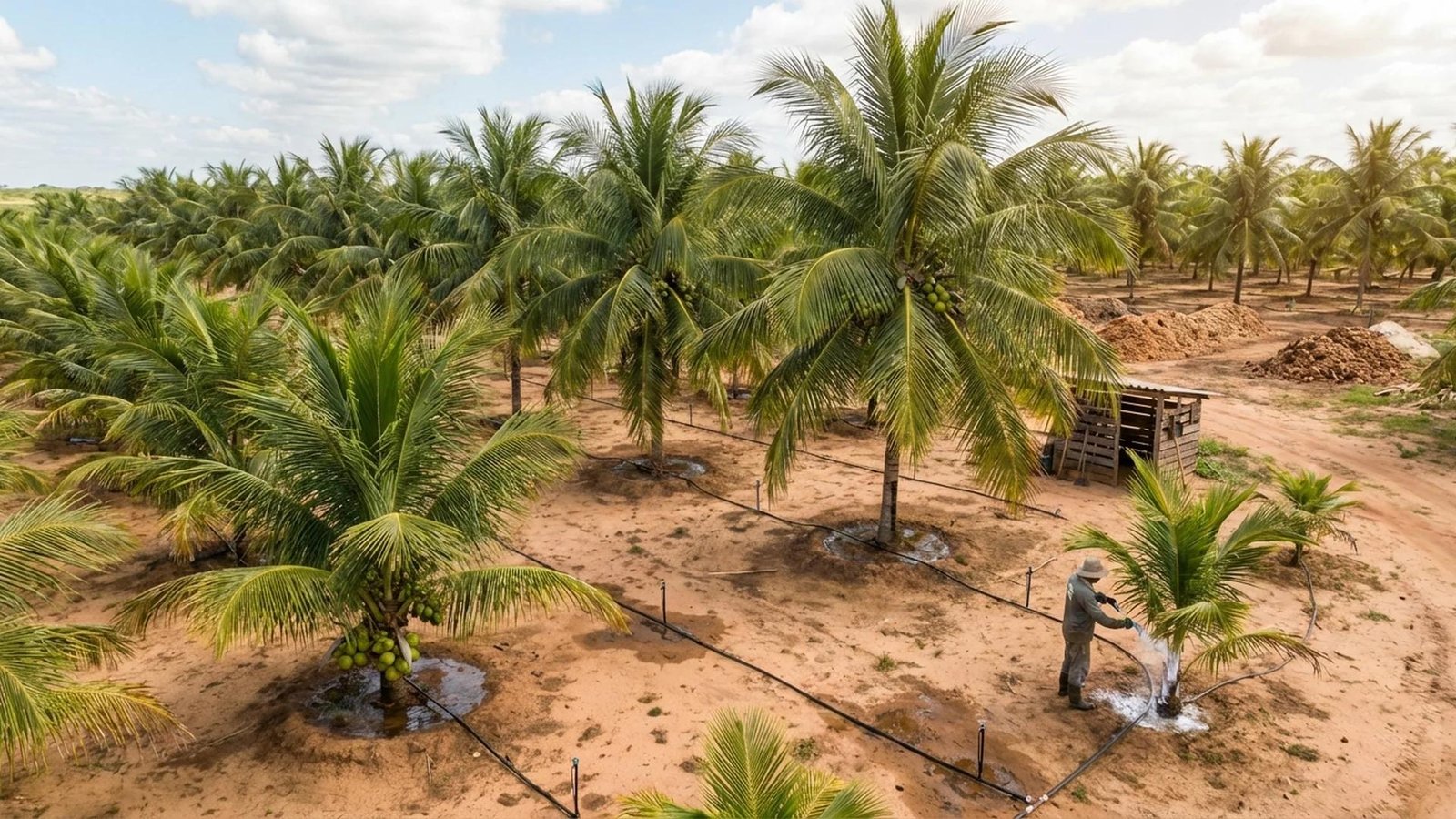
Plant at a spacing of 7.5 × 7.5 m (square system) — 177 palms/ha. Triangular planting at 7.6 m gives 198 palms/ha. Plant at the onset of monsoon and provide irrigation during dry weather.